Accessible, plain-English websites for NDIS providers and care organisations
Participants, families, carers and support coordinators visit an NDIS website with different questions and different access needs. Blu Mint Digital designs fast, calm, WCAG 2.2 AA aligned websites that explain your supports clearly and make enquiries straightforward.
A clear scope, agreed inclusions and a written proposal before work starts.
Inspectable NDIS websites delivered by Blu Mint Digital
Rather than speaking about accessibility in the abstract, you can inspect live disability-support websites our Melbourne studio has designed and built.
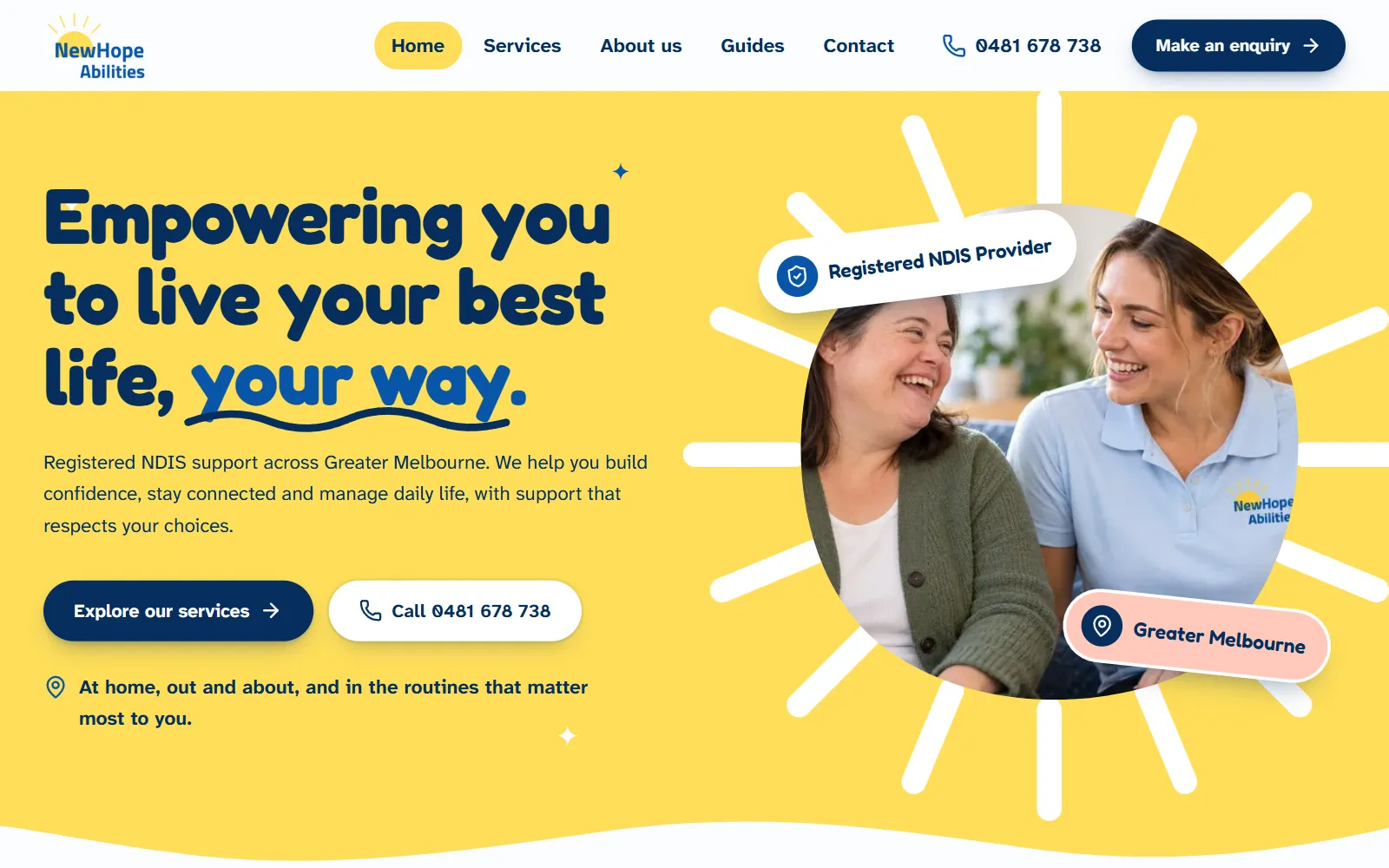
Registered NDIS provider · Melbourne
NewHope Abilities
A complete website built around plain-English explanations: ten individual support pages that explain what each support covers (and what it does not), a searchable library of 100 plain-language guides across ten topics, high-legibility type for low-vision readers, and a role-aware enquiry form for participants, families, carers and support coordinators.
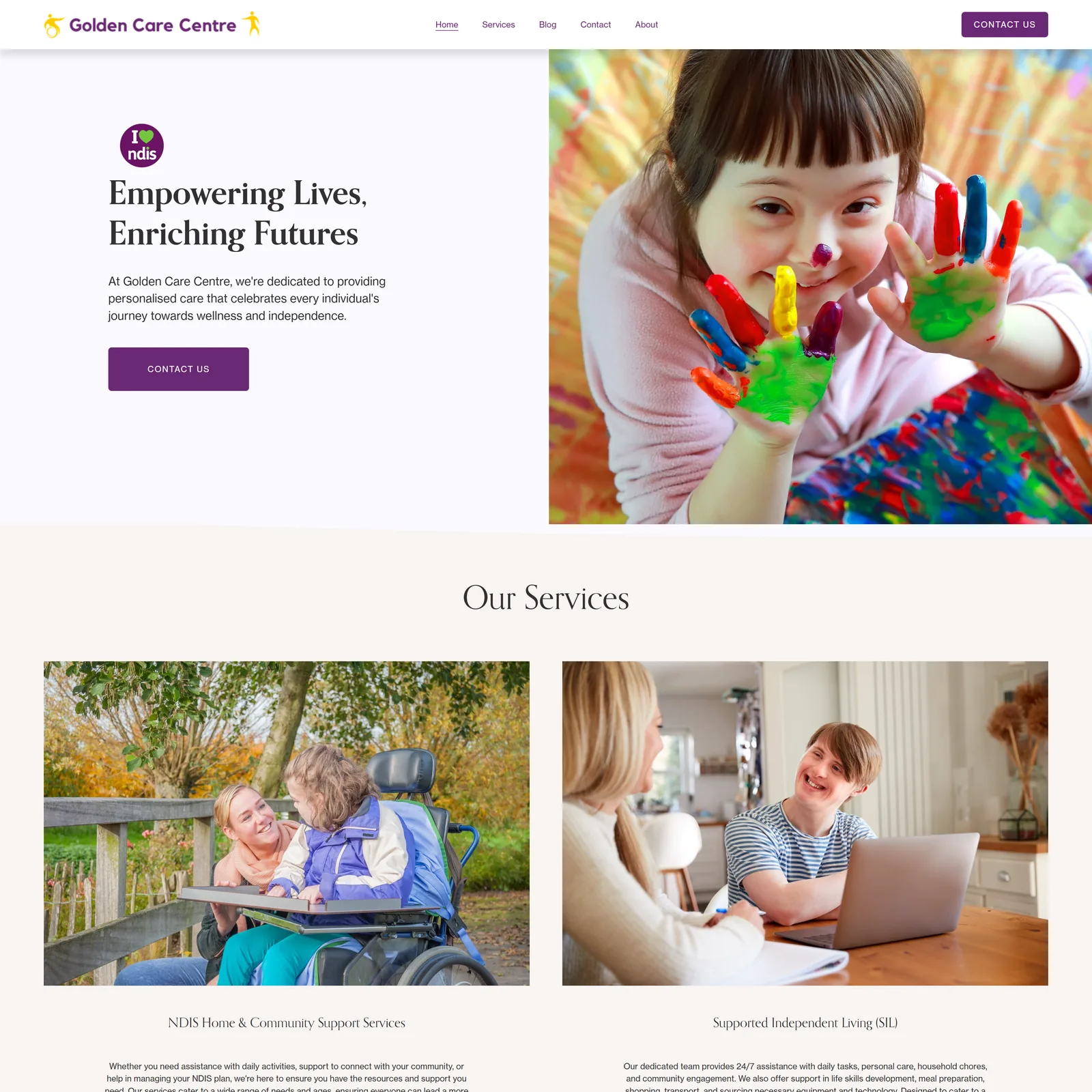
A warm, approachable website for an NDIS services organisation, structured to help participants and families understand available daily living and community supports quickly, verify service areas, and get in touch without navigating clinical or bureaucratic jargon.
Written for the four people who use an NDIS website
Many provider websites fail because they copy NDIS Price Guide wording straight onto the screen. Nobody searching for help at home wants to decode registration group numbers before they can ask a question. We plan your information architecture around real visitors:
Participants
Plain-language descriptions of what support looks like day to day, readable typography, calm layouts without auto-playing distractions, and clear next steps.
Families, nominees & carers
Honest information about who comes to the home, how safety and NDIS Practice Standards are handled, and what gets discussed before a service agreement starts.
Support coordinators & LACs
Fast verification of registration status, exact support categories, suburb or regional coverage, current enquiry pathways and who will reply.
Multilingual communities
Optional human-reviewed translations and bilingual pathways, including Arabic and right-to-left layouts, so culturally diverse families are welcomed properly.
Accessibility built into the foundations, not bolted on via an overlay
Accessibility toolbar widgets do not make an inaccessible template compliant, and they often interfere with the assistive technology participants already use. Under the Disability Discrimination Act 1992 and Australian accessibility expectations, WCAG conformance belongs in the semantic HTML, contrast, keyboard behaviour and copy itself.
How Blu Mint Digital approaches WCAG 2.2 Level AA in NDIS website builds
Accessibility area
What we build into templates
What we verify before launch
Colour & low-vision legibility
Contrast-checked colour pairings, generous line spacing, clear typefaces and layouts that hold together when text is zoomed to 200 percent.
Contrast checks across buttons, cards, badges and form states on both desktop and mobile viewports.
Keyboard & motor navigation
Logical tab order, skip-to-content support where appropriate, generous tap targets and unmistakable focus rings on every interactive control.
End-to-end keyboard walkthrough of menus, accordions, service links and referral forms without a mouse.
Screen readers & structure
One H1 per page, sequential headings, semantic landmarks, meaningful image alt text and decorative graphics hidden from assistive tech.
Automated axe and Lighthouse checks paired with manual heading, landmark and label inspection.
Plain language & forms
Everyday English instead of bureaucratic jargon, explicit labels above every field, helpful validation messages and role selection.
Form submission testing, confirmation messaging and clear reminders not to send sensitive clinical records via general web forms.
Delivery scope and what changes your quote
A five-page website for a new specialist support business is a very different project from a thirty-page provider hub with a searchable guide library and separate coordinator referral forms. We scope your actual requirements and agree a fixed project fee in writing before design begins.
NDIS & accessible website scope breakdown
Workstream
Focused provider scope
Expanded scope (agreed if needed)
Support pages
Homepage, about, coverage area, contact and dedicated pages for your core supports.
Ten or more individual support pages, SIL or SDA property listings, or multi-region location hubs.
Enquiry & referral flow
Role-aware enquiry form for participants, families and coordinators with email confirmation.
Dedicated support-coordinator referral forms, CRM routing or structured intake workflows.
Content & plain-English guides
Clear structure and editorial tidy-up of your approved service information.
Full plain-language copywriting, printable participant guides or searchable resource hubs.
Platform & editing
Fast Next.js or clean WordPress build matched to how often your team edits pages.
Custom CMS collections, multilingual page sets, or migration from an older slow site with 301 redirects.
What accessibility standard do you build NDIS websites against?
Blu Mint Digital designs and tests templates against WCAG 2.2 Level AA criteria, including colour contrast, keyboard navigation, visible focus states, logical heading order, resizable text, descriptive links and labelled form controls. Ongoing accessibility also depends on how future content, documents and third-party embeds are published.
Do we need to be a registered NDIS provider to work with you?
No. We build websites for both registered and unregistered NDIS providers, allied health practices, support coordination teams and community organisations. Your website should state your actual registration status accurately so participants, families and support coordinators know how they can work with you.
How do you structure pages so support coordinators actually refer?
Support coordinators scan quickly for three things: the specific supports you deliver in plain language, the suburbs or regions you cover, and a straightforward referral or enquiry route. We organise service pages around everyday support descriptions rather than internal NDIS line-item codes.
Can one enquiry form handle participants, families and support coordinators?
Yes. On our NDIS builds, the enquiry form asks who is getting in touch (for example a participant, family member, carer or support coordinator) and keeps service selection optional if the visitor is not sure yet. We also remind visitors not to upload sensitive medical records through a general website form.
Can you include multilingual or Arabic content on an NDIS website?
Yes. Where your participants and families speak languages other than English, we can scope human-reviewed translations, bilingual page layouts and right-to-left Arabic typography so community members do not have to rely on broken machine-translation widgets.
How is an NDIS or accessible website quoted?
Every project is quoted at a fixed price once we agree on the number of support pages, referral or intake workflows, content preparation, resource libraries and editing needs. Hosting, ongoing care and any third-party software costs are itemised separately in your written proposal before work starts.
Turn the requirements into a clear proposal
Send your current website, priorities and preferred timing. We will review the requirements, clarify any integration work and agree on scope and costs.